Tokyo → Hong Kong
Case Study: Urgent Data Centre Hardware Relocation (Japan to Hong Kong)
- Corridor
- Tokyo → Hong Kong
- Equipment
- Dell data centre hardware
- Our role
- Exporter of Record (EOR) in Japan · Importer of Record (IOR) in Hong Kong
- Regulator
- Hong Kong Trade and Industry Department (TID)
- Classification
- Confirmed in writing in approximately three business days
- Delivered
- 12 November 2025
Executive Summary
A global technology enterprise faced a critical hardware imbalance, with a severe capacity shortage in its Hong Kong data centre and idle, suitable equipment sitting offline in Japan. CFL engineered an end-to-end cross-border solution, acting as the legally liable Exporter of Record (EOR) in Japan and Importer of Record (IOR) in Hong Kong. By preemptively securing technical classification from the Hong Kong Trade and Industry Department (TID) before the cargo ever reached the terminal, CFL successfully transferred the equipment and restored the client's operational capacity within days, bypassing all border friction and storage delays.
The Operational & Regulatory Challenge
Moving enterprise IT infrastructure across borders is never a simple freight-forwarding exercise, particularly when timelines are heavily compressed. In this scenario, the client possessed available Dell hardware in Tokyo but urgently needed it racked and live in Hong Kong to maintain regional capacity requirements. The severity of the shortage meant there was zero tolerance for customs delays, terminal storage holds, or unexpected regulatory friction.
The first major barrier was liability. The client lacked the localized legal entities required to compliantly export the hardware from Japan or import it into Hong Kong. Relying on standard freight forwarders or decentralized "paper importers" was structurally impossible; the legal liability, tax obligations, and customs declaration responsibilities had to be assumed by a single, verifiable entity to ensure chain-of-custody control.
The second, more critical barrier was regulatory classification. Hong Kong maintains stringent strategic commodity controls over specific categories of technology, encryption-enabled devices, and telecommunications equipment. The Dell hardware in question required rigorous technical review to determine if it fell under restricted import categories. In a standard, reactive logistics model, this equipment would have been placed on an aircraft, only to be stopped by Hong Kong customs upon arrival. Without proactive pre-classification and the correct technical evidence on hand, the shipment faced a near-certainty of being flagged by the authorities. This would have triggered an investigative hold, accruing exorbitant daily terminal storage fees, extending the capacity outage, and leaving the client’s data centre under-resourced indefinitely.
The CFL Execution Mechanics
CFL did not treat this deployment as a freight booking; we treated it as a compliance execution project. We assumed full legal responsibility on both sides of the transaction, acting as the EOR in Japan to govern the export controls, and the IOR in Hong Kong to execute the import clearance.
Pre-Shipment Regulatory Audit:
Before a single piece of hardware was powered down or collected from the Japanese facility, the CFL compliance team conducted a deep technical review of the Dell equipment. We identified immediately that the Hong Kong Trade and Industry Department (TID) would require explicit technical justification to confirm the hardware was not a controlled strategic commodity.
Document Engineering & Manufacturer Coordination:
In the reactive model utilized by most providers, this documentation gap is usually discovered by a customs officer at the border. In CFL's system-driven model, we addressed it upfront. We bypassed standard logistics channels and coordinated directly with the client’s technical team and the original equipment manufacturer (OEM) to secure a formalized manufacturer’s letter, detailing the precise technical specifications and cryptographic capabilities of the servers.
Pre-Classification & Regulator Engagement:
Armed with the technical evidence, CFL submitted the documentation directly to the Hong Kong TID for pre-classification before authorizing the export from Japan. We did not wait for customs to ask a question; we presented a complete, defensible compliance file proactively, removing the burden of interpretation from the border agent.
Synchronized Physical Execution:
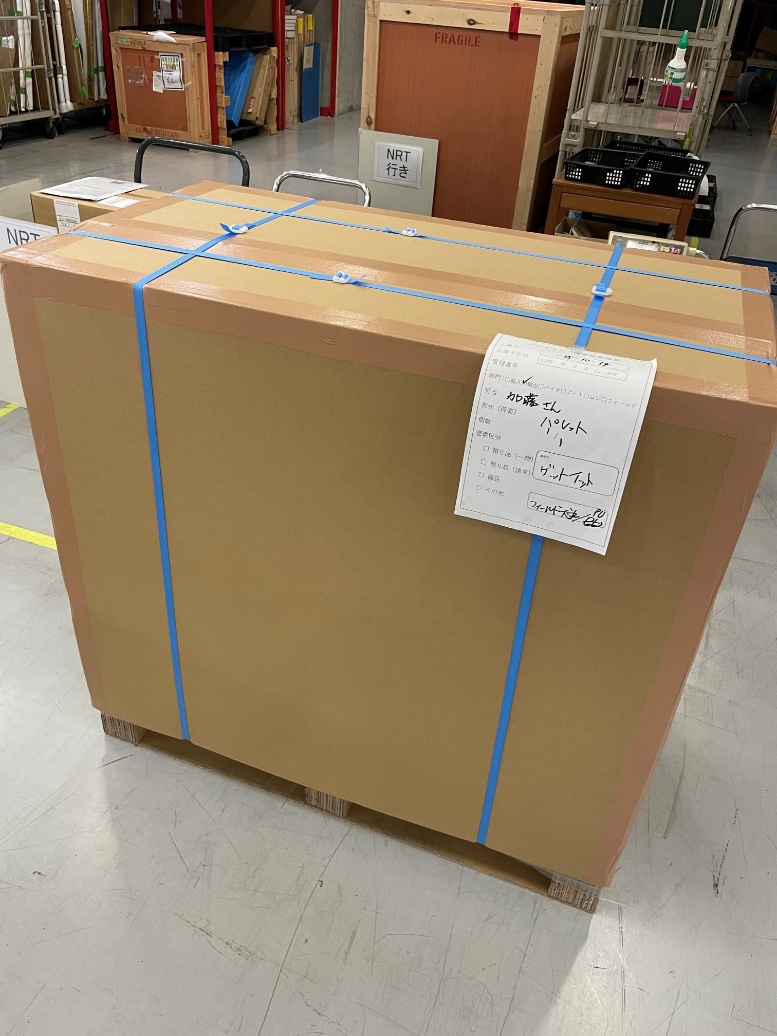
With the regulatory pathway secured and legally binding, we synchronized the physical movement. CFL managed the specialized collection from the Tokyo data centre, executed the Japanese export customs clearance, secured the priority airfreight capacity, and coordinated the destination terminal release in Hong Kong. Because the compliance was pre-structured, the physical transit encountered zero regulatory friction.
The Measurable Outcome
The proactive compliance strategy yielded immediate results. Within approximately three business days of our submission, the Hong Kong authorities confirmed in writing that the Dell hardware was not a controlled item.
With the regulatory risk eliminated, the cargo moved from Japan to Hong Kong without a single customs hold or inspection delay. CFL managed the final-mile vehicle details and secure access arrangements, completing the final delivery directly to the destination data centre on 12 November 2025. Proof of delivery and a fully auditable compliance file – containing all export declarations, TID rulings, and import clearances – were immediately handed over to the client.
Through one compliant, fully coordinated cross-border solution managed by a single liable operator, the client successfully converted idle equipment in Japan into actively deployed, revenue-generating capacity in Hong Kong, meeting their critical infrastructure deadlines without assuming any local entity risk.
Talk to an Expert
Request a Corridor Check
Tell us the origin, the destination and what is moving. We come back with the licences you need, the duties you will pay, and how long it takes.
Every enquiry is answered by a trade compliance specialist within four business hours
sales@cflworldwide.com